Open All Hours: How AI Is Quietly Running Customer Service for Ghanaian Business
From Accra's banks to one-person WhatsApp shops, AI agents are answering customers around the clock — cutting costs and winning loyalty. Here's what it means for yours.
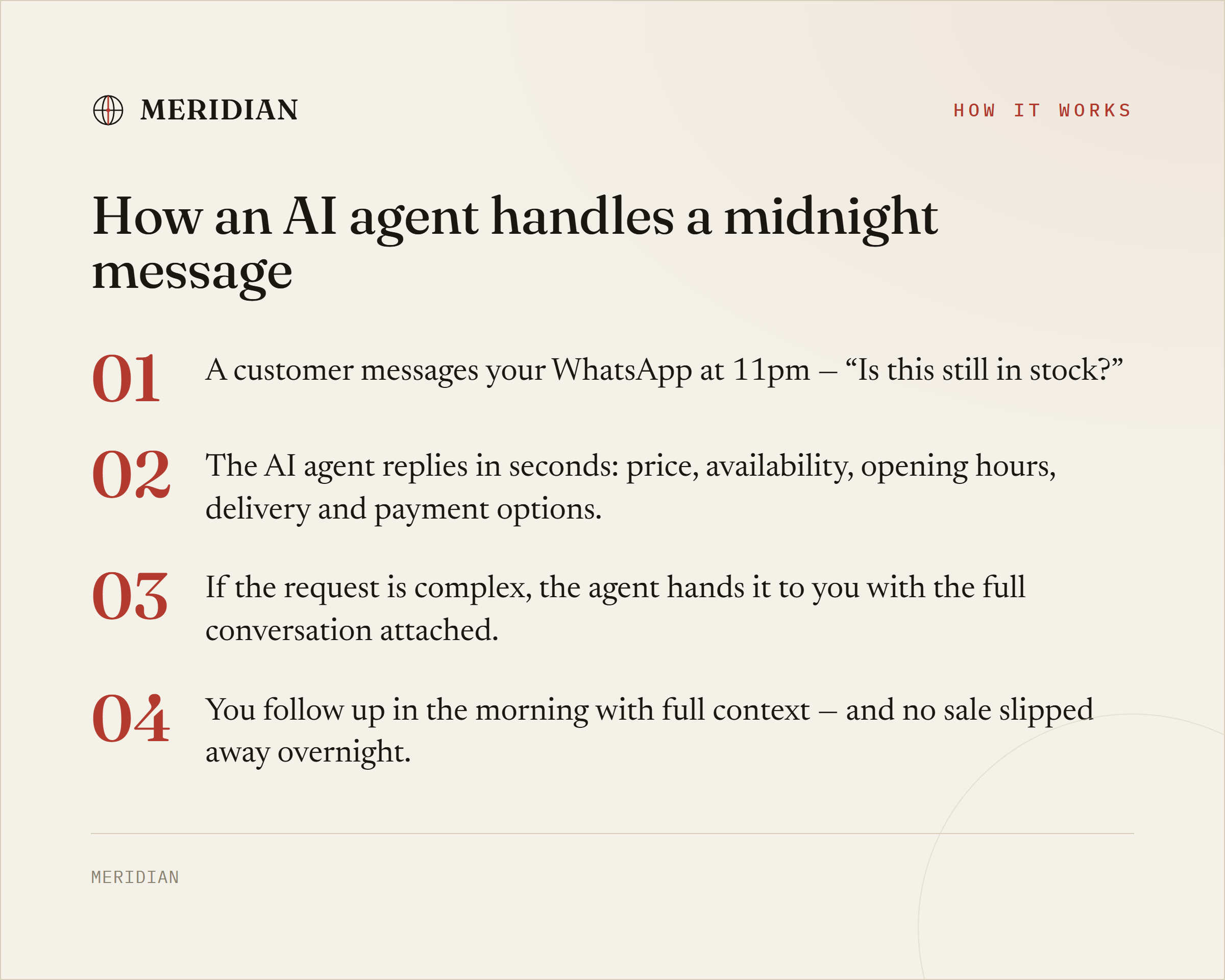
It is 9pm in Kumasi. A customer scrolls past your shop on Instagram, likes what she sees, and sends a WhatsApp message: “Do you have this in size 40? How much, and can you deliver to Tema?” In most Ghanaian businesses, that message sits unread until morning. By then she has messaged three other shops — and bought from whichever one answered first.
That quiet, after-hours gap is where sales leak out of small businesses every single day. It is also exactly the gap that AI customer service is built to close.
What an AI agent actually is
Strip away the buzzwords and it is simple: an AI agent is a smart assistant that chats with your customers for you — on WhatsApp, Instagram, Facebook, or your website — and answers them instantly, at any hour. Unlike a basic auto-reply, it understands what people are actually asking, pulls the right answer, and can even take an order or confirm a Mobile Money payment. When a question is too tricky, it hands the conversation to a human instead of guessing.
The pitch to a busy business owner is not “replace your team.” It is “stop losing customers to silence.”
Why after-hours is costing you
Ghanaian commerce increasingly lives in the chat window. Customers expect a reply in minutes, not hours, and they rarely wait. An agent that never sleeps means the lunchtime rush, the late-night browser, and the weekend shopper all get answered — turning idle messages into orders.
The numbers behind it
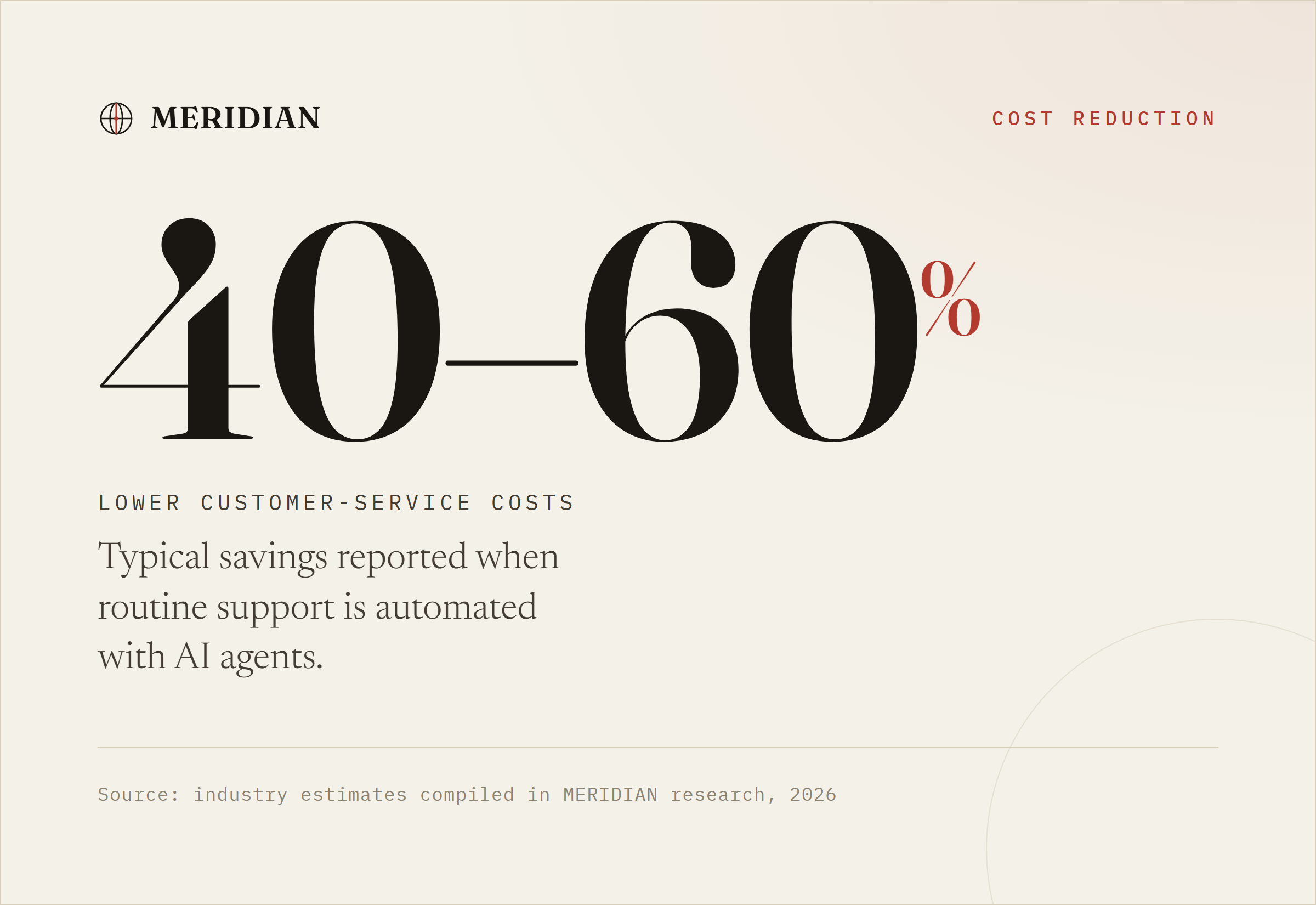
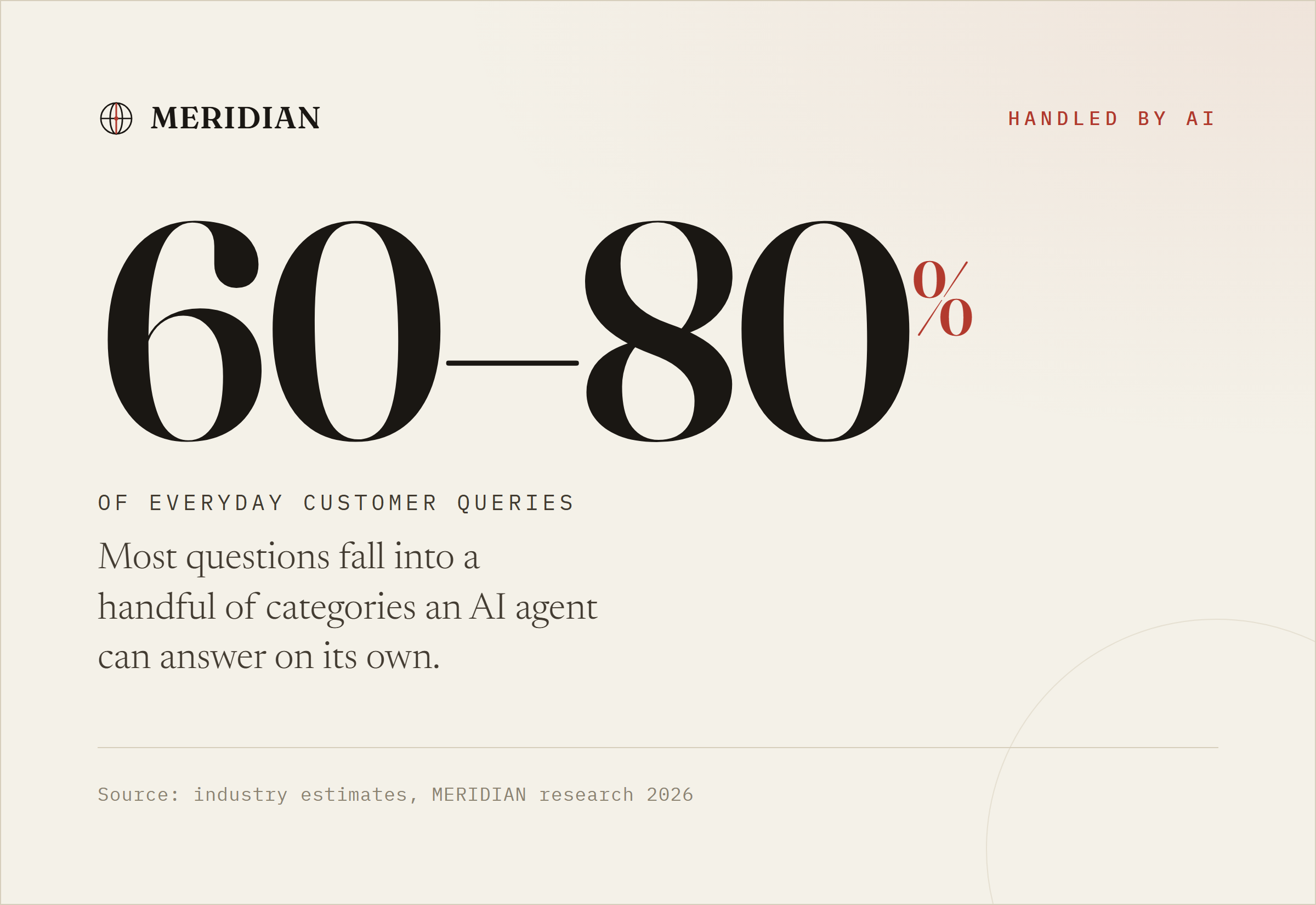
The economics are hard to ignore. Industry analyses put the cost of routine support at 40–60% lower once it is automated, with most everyday questions — hours, prices, order status, directions — falling into a small set of categories an AI can handle on its own. Across the continent, the African AI market is growing at roughly 27% a year, and customer service is one of its fastest, most practical entry points.
It's already happening — across Africa and in Ghana
This is not a someday technology. Across the region, big brands already lean on AI assistants: UBA's Leo, Safaricom's Zuri in Kenya, and MTN's Zigi in Nigeria all field customer questions automatically. Closer to home, Ghanaian banks such as Absa and Ecobank have been folding AI into their service channels, and hospitality operators in Accra use it to handle booking enquiries around the clock.
The more telling story is local innovation. Chatbots Africa, founded by Ghanaian entrepreneur Ronald Tagoe, builds conversational AI that chats with customers on WhatsApp, Instagram and Facebook — and already serves businesses across several African countries. The tools that once belonged to banks and telcos are now within reach of the corner shop.
Your customers are already messaging after 9pm. The only real question is whether anything answers.
How to start — without overcomplicating it
You do not need a tech team or a big budget. The businesses getting this right tend to start small and specific:
- Start where your customers already are. For most Ghanaian businesses that means WhatsApp Business — not a brand-new app.
- Automate one job first. Teach it to answer your ten most-asked questions perfectly before adding anything else.
- Keep a human in the loop. Let AI handle the routine and hand off anything sensitive, with the full chat attached.
- Mind the local touch. Set it to greet customers warmly and, where it helps, in the language they actually use.
AI will not replace the personal relationships that make Ghanaian businesses special — it protects them, by making sure no customer is ever left waiting. The owners adopting it now aren't chasing a trend. They're quietly making sure that next 9pm message gets answered before a competitor's does.
Sources
Get the next issue
One sharp briefing a week, grounded in real sources.
Subscribe to MERIDIAN →